

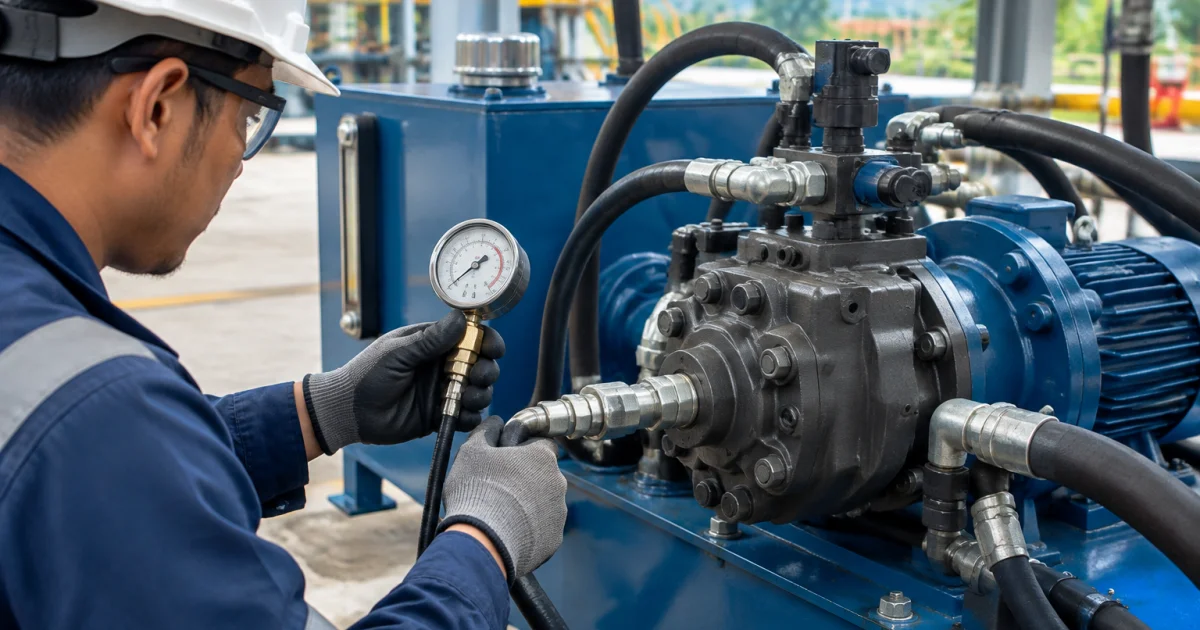

Opinion: Why Hydraulic Pump Failures in Malaysia Are Often a System Problem (Not a Pump Problem)
When a hydraulic pump fails, many plants do the quickest thing: replace the pump and move on. That response is understandable—production is down and a new pump feels like a clear fix. But when failures repeat, the pump is often reporting a system problem rather than being the root cause.
This matters in Malaysia because many sites operate in hot, humid conditions with mixed-duty cycles and uneven maintenance practices across teams and contractors. Those factors don’t automatically “cause” pump failures, but they can amplify weaknesses in suction plumbing, filtration discipline, cooling capacity, and commissioning. If you’re searching for Hydraulic Pump Malaysia options because pumps keep burning out, it’s worth asking: what conditions is the system forcing the pump to survive?
Opinion note: Pumps can fail from wear, defects, or incorrect selection. The point here is that when failures recur—especially after multiple replacements—the odds shift strongly toward system-level drivers.
The pump is a messenger: what repeat failures usually mean
A pump is a high-precision component. It needs correct fluid and viscosity, good inlet conditions, stable temperature, proper alignment, and a circuit that avoids constant pressure spikes, aeration, or chronic relief flow. When those fundamentals are wrong, the pump doesn’t just “run a bit worse”—it gets noisy, runs hot, cavitates, wears internally, and fails.
This is why a new pump often delivers only a short honeymoon. The system returns to the same operating reality, and the same failure pattern reappears—sometimes sooner because new pumps with tighter clearances can be less tolerant of contamination or inlet restrictions.
Repeat-failure patterns that should trigger a system investigation include:
- Noise and vibration early in life (often suction issues, aeration, misalignment, or cavitation).
- Overheating (inefficiency, poor cooling, wrong viscosity, internal leakage, or incorrect relief settings).
- Shaft seal leakage (case drain restrictions/backpressure, misalignment, or contamination damage).
- Rapid loss of pressure/flow (contamination wear, air ingestion, incorrect fluid, or bypassing valves).
- Frequent relief valve opening (wrong pressure settings, shock loads, or sticky/unstable valves).
The usual suspects: system causes that “kill” pumps
A practical approach is to start with common system contributors and confirm or eliminate them one by one. Don’t guess—measure where you can.
1) Suction-side restrictions and poor inlet conditions
Many “mystery failures” start at the inlet. Long suction runs, undersized hoses, too many elbows, clogged strainers, a collapsing suction hose, or minor air leaks can starve the pump. The pump then pulls harder, vapor bubbles form, and cavitation erosion and noise follow.
Watch for:
- Foamy oil in the reservoir (air entrainment or vortexing).
- Rattling/“gravel” noise at startup or under high demand.
- Kinked hoses, soft-wall suction hose, and fittings that were installed “close enough.”
Opinion: replacing pumps without documenting inlet vacuum, suction line sizing, and aeration sources is treating symptoms, not causes.
2) Contamination and filtration strategy gaps
Contamination is not only “dirty oil.” It includes new-hose debris, seal fragments, wear metals, moisture, and wrong lubricants introduced during maintenance. Pumps run on tight clearances; abrasive particles accelerate wear, increase internal leakage, and generate heat. If the contamination loop isn’t stopped, the next pump sees the same conditions.
Common gaps include:
- Filter selection mismatch (wrong micron rating, inadequate dirt-holding capacity, incorrect bypass settings).
- Filter placement issues (return-line only when pressure-line protection or offline filtration is needed).
- Poor cleanliness during hose work (uncapped lines, open ports, linty rags, dirty storage).
If your plant frequently sources hoses and fittings during breakdowns, standardising cleanliness and installation practices can reduce repeat failures. For related guidance, see Sunseal’s article on best practices for selecting hydraulic hose in Malaysia.
3) Heat, viscosity, and the “it’s always hot here” excuse
High ambient temperature can expose marginal cooling designs, but heat is often a symptom of inefficiency: relief dumping, oversized pumps running in bypass, and rising internal leakage as wear progresses. As temperature climbs, viscosity drops, film strength falls, and pump/valve wear accelerates.
Practical checks:
- Trend operating temperature across shifts (not just a single reading).
- Confirm the oil viscosity grade matches the operating temperature range.
- Inspect coolers for fouling and verify fan/pump performance.
4) Pressure settings, shock loads, and unstable control behaviour
Pumps are often blamed for failures caused by pressure spikes. Fast-closing valves, aggressive proportional tuning, or incorrect accumulator pre-charge can create transient peaks that a standard gauge won’t capture. Over time, spikes fatigue components, damage bearings, and accelerate seal wear.
Unstable regulators, sticky spools, or poorly managed pilot lines can also cause hunting (constant pressure cycling), which heats the oil and stresses the pump. If your team needs a shared baseline on pressure-control behaviour, Sunseal’s beginner guide to pressure regulators in Malaysian industrial systems can help align troubleshooting language.
5) Alignment, mounting, and coupling problems
Not all pump failures are purely hydraulic. Misalignment, soft foot, excessive piping strain, or an incorrectly installed coupling can overload bearings and shaft seals. The pump may still run, but early bearing noise and seal leakage are common outcomes.
Installation details that often decide reliability:
- Baseplate flatness and correct torque sequence.
- Coupling type, condition, and correct gap.
- Proper pipe supports so pump ports don’t carry mechanical load.
How to investigate: a practical system-first diagnostic workflow
If you’re deciding whether to repair, redesign, or replace, use a repeatable workflow that separates opinion from evidence.
Step 1: Define the failure mode, not just “pump failed”
Record what happened: noise, heat, low pressure, slow actuators, motor overload trip, seal leak, metal in filters, or sudden seizure. If you have the pump, document damage (scoring, discoloration, bearing failure, cracked housing). A consistent failure mode is a strong clue.
Step 2: Check the inlet side (before touching pressure settings)
Inspect reservoir level, breather condition, suction strainer, suction hose type, and recent changes (new oil, tank cleaning, hose replacement, supplier changes). Look for aeration sources: loose clamps, cracked hoses, damaged threads/sealing faces, and return lines dumping too close to the suction pickup.
Step 3: Validate fluid condition and contamination control
Even without lab data, basic observations help: is the oil dark, milky, foamy, or burnt-smelling? Are filters bypassing? Are differential indicators ignored? If filters always look “fine” but pumps keep failing, you may have inadequate filtration at critical points or contamination being introduced during maintenance.
Step 4: Confirm pressure, relief behaviour, and duty cycle realities
Verify whether the machine is operating as originally intended. Production changes can alter duty cycles—longer runs, higher loads, faster cycle times, different products. A circuit stable at one duty cycle may become heat-soaked or unstable at another. Confirm relief settings, check for chronic relief flow (a major heat source), and investigate intermittent sticking valves that force high pressure unnecessarily.
Step 5: Review component matching—pump, motor, hoses, fittings, and valves
Problems often begin after “equivalent” replacements. Different displacement, case drain requirements, rotation direction, pressure rating, or control type can change system behaviour. A suction hose with too small an ID, or a fitting with the wrong seat type, can introduce restriction, leakage, or air ingress. If fitting standards are a recurring pain point, refer to how to choose the right hydraulic fitting in Malaysia.
Step 6: Decide: repair, redesign, or replace (with the system in scope)
Once likely drivers are narrowed, decide based on repeatability and risk:
- Repair when the root cause is clearly found and corrected (for example, suction leak fixed, filtration upgraded, relief set correctly) and the damage matches that cause.
- Redesign when the circuit is inherently inefficient or unstable for today’s duty cycle (for example, chronic relief dumping, inadequate cooling, or shock loads needing accumulators/snubbers).
- Replace when the existing pump is unsuitable for the pressure/flow demands, fluid type, or control strategy—even if it “used to work.”
In practice, the best supplier is not the one who ships the fastest replacement, but the one who helps you stop buying the same replacement repeatedly.
Procurement reality: why “brand shopping” rarely solves recurrence
Brand differences can matter in build quality and support. But if the system is ingesting air, running hot, and circulating contaminants, changing brands often just changes the timeline to the next failure.
Structured comparison is still useful—especially for suitability, spares, and correct specification. If you’re evaluating options, Sunseal’s guide on comparing hydraulic pump brands in Malaysia can help. Treat brand selection as one layer of reliability, not the foundation.
A stronger procurement question is: what operating conditions will we control around the pump? Examples include minimum inlet line size, filtration rating and change triggers, temperature limits, and commissioning checks (alignment, rotation, case drain routing). When these are controlled, pump selection becomes clearer and failures become less “mysterious.”
Conclusion: treat the pump failure as evidence, then fix the system
One pump failure might be the pump. Repeated failures are often driven by the system—suction conditions, contamination control, heat management, pressure stability, or installation practices. The pump is simply one of the first precision components to complain.
If downtime is escalating and you’re investigating Hydraulic Pump Malaysia suppliers or replacements, widen the scope of troubleshooting and purchase specifications. A system-first investigation often costs less than the next unplanned outage and leaves you with a more stable, maintainable machine after the new pump is installed.
Frequently Asked Questions
What are the most common signs that a hydraulic pump failure is actually a system issue?
Repeated pump replacements with similar symptoms (noise, heat, seal leaks, rapid loss of pressure/flow) usually indicate suction problems, contamination, chronic relief operation, pressure spikes, or installation/misalignment rather than a one-off pump defect.
Can suction line problems really destroy a pump even if the pressure side looks normal?
Yes. Poor inlet conditions can cause aeration or cavitation, which damages internal surfaces and bearings over time. A pump can still make pressure for a while, but it may run noisy, hot, and wear quickly if it is being starved at the inlet.
How should we decide between repairing the pump and redesigning the hydraulic system?
Repair is reasonable when you can identify and correct a clear root cause (for example, a suction leak or blocked strainer) and the damage matches that cause. Redesign is more appropriate when the circuit is inherently inefficient or unstable for the current duty cycle—such as frequent relief dumping, inadequate cooling capacity, or recurring shock loads.
Does switching hydraulic pump brands usually fix recurring failures?
Not by itself. A better-built pump may last longer, but if the system is running hot, ingesting air, or circulating contaminants, the new pump is still exposed to the same failure drivers. Brand selection should come after the system conditions and specifications are tightened.
What information should we collect before contacting a supplier for hydraulic pump support in Malaysia?
Record the failure mode (noise, overheating, leakage, low flow), operating pressure/temperature trends, fluid type and maintenance history, filtration setup, suction line configuration, and any recent changes (new oil, hose replacement, modified cycle time). Photos of the installation and damaged parts also help suppliers diagnose faster and recommend the right supporting components.
Stop repeating pump failures—review the whole hydraulic system with Sunseal
Sunseal Enterprise Sdn. Bhd. supports Malaysian plants with a one-stop range of hydraulic pumps, hoses, fittings, valves, seals and O-rings—plus practical guidance to help you correct root causes like suction issues, contamination control, and pressure instability. If you’re troubleshooting recurring pump breakdowns, share your symptoms and operating conditions and we’ll help you narrow down the likely system drivers and the right components to address them.