


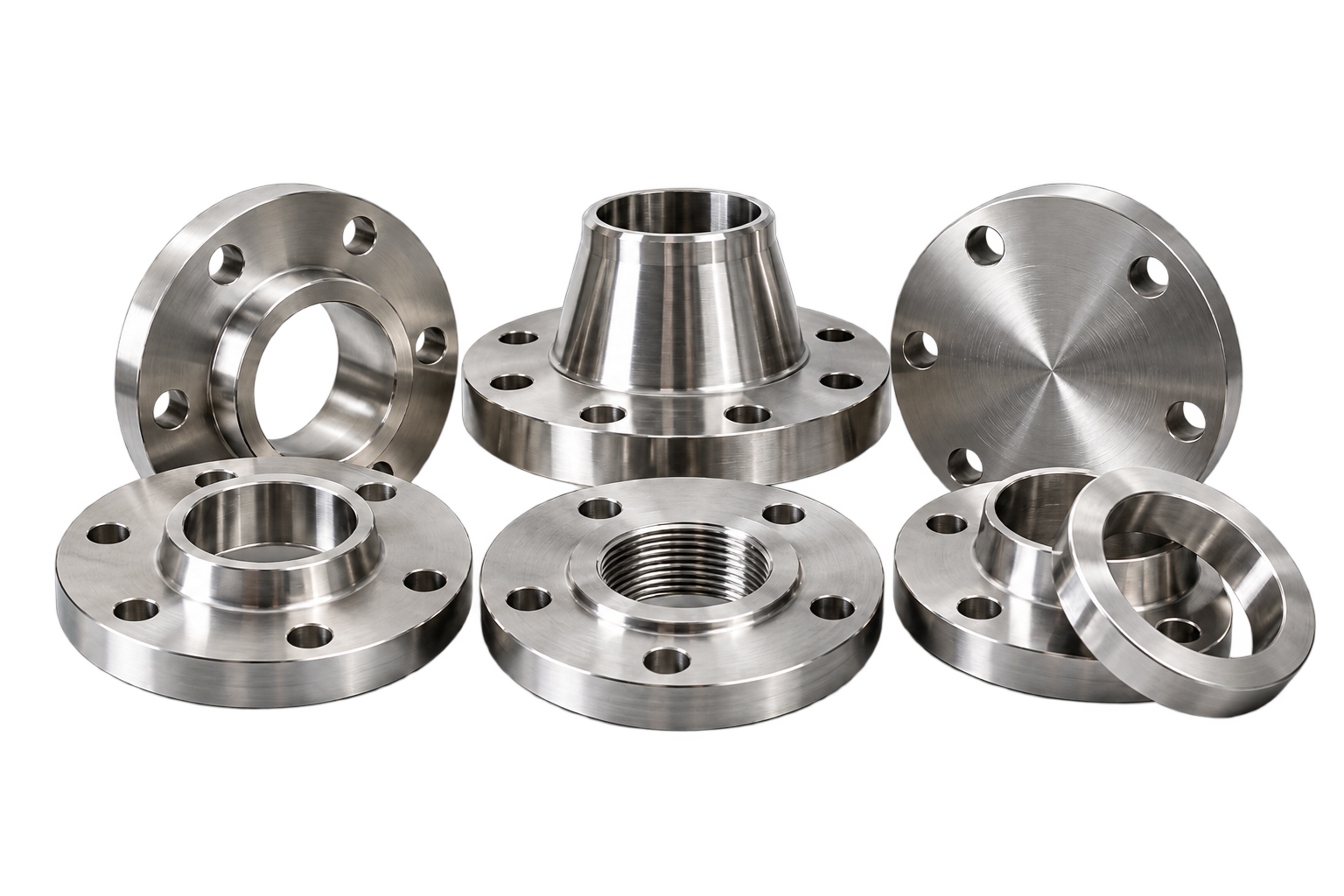
Description
ANSI Flange Types Available
Different flange designs suit different connection and maintenance requirements. Sunseal’s current ANSI flange range includes the following types.
Weld Neck Flange
Weld neck flanges have an extended neck designed to be welded to the pipe.
They are commonly considered for piping systems where a welded connection is required. When selecting a weld neck flange, the pipe dimensions, material, operating conditions and flange specifications should be checked against the system requirements.
Slip-On Flange
Slip-on flanges are designed to slide over the pipe before being positioned and welded.
They can be considered for piping installations where this connection arrangement is suitable. Correct flange and pipe dimensions are important to ensure compatibility with the intended installation.
Blind Flange
Blind flanges are used to close the end of a piping system or an opening where no flow connection is required.
They can also provide access to a system when future inspection, maintenance or modification is required. Selection should take into account the flange size, material and operating conditions of the piping system.
Socket Weld Flange
Socket weld flanges incorporate a socket into which the pipe is inserted before welding.
The appropriate flange should be selected according to the pipe dimensions, material and system operating requirements.
Lap Joint Flange
Lap joint flanges are used together with a corresponding stub end.
This arrangement can be useful in applications where flange alignment, disassembly or access to the piping connection is an important consideration.
Threaded Flange
Threaded flanges connect to compatible threaded piping without requiring the same welded connection used by weld neck, slip-on or socket weld designs.
The thread specification, pipe size, material and operating conditions should be confirmed before selecting a threaded flange.
ANSI Flange Materials
Sunseal lists ANSI flanges in:
- Stainless steel
- Carbon steel
- Alloy materials
The appropriate material depends on the piping system and operating environment.
Factors such as the fluid or gas being handled, temperature, pressure, surrounding conditions and compatibility with connected piping and equipment should be considered when selecting the flange material.
For systems using stainless steel fluid lines, Sunseal also supplies stainless steel tubing and related fittings as part of its Tube & Pipe range.
Choosing the Right ANSI Flange
Selecting a flange should start with the requirements of the piping system rather than the flange type alone.
Useful information to provide when requesting an ANSI flange includes:
- Required flange type
- Nominal pipe or connection size
- Piping material
- Fluid or gas being handled
- Operating pressure
- Operating temperature
- Connection method
- Existing flange specification or markings
- Connected pipe, valve, pump or equipment details
Where an existing flange is being replaced, photographs, dimensions and markings from the existing component can also help with identification.
The required flange specification should be compatible with the connected piping and equipment. Avoid selecting a replacement based only on outside dimensions, as flanges that appear similar may have different specifications.
ANSI Flanges for Piping and Fluid-Handling Systems
Flanges often form part of a wider piping or fluid-handling system involving pipes, valves, pumps and fittings.
Sunseal supplies related industrial components including SS316 tube fittings, stainless steel tubing and hydraulic fittings for different connection requirements.
For systems requiring flow isolation or control, Sunseal also supplies stainless steel ball valves and instrumentation valves.
Considering the flange together with the connected pipe, valve or equipment helps ensure that component specifications are compatible with the wider system requirements.
Information to Provide When Requesting a Flange
To help identify a suitable flange, provide as much existing system information as possible.
For a replacement flange, this may include:
- Photos of the existing flange
- Existing markings
- Flange dimensions
- Pipe dimensions
- Material
- Connection type
- Application
- Operating pressure and temperature
If the existing specification is known, provide it together with the equipment or piping information when making an enquiry.
Frequently Asked Questions (FAQs)
What information should I provide when requesting an ANSI flange?
Provide the required flange type, pipe or connection size, material, operating pressure and temperature, and the fluid or gas being handled. Existing flange markings, dimensions and photographs are also useful for replacement enquiries.
Which ANSI flange types does Sunseal supply?
Sunseal’s current range includes weld neck, slip-on, blind, socket weld, lap joint and threaded flanges. The appropriate type depends on the piping arrangement, connection method and application requirements.
How do I know which flange material to choose?
Consider the piping material, process media, operating temperature, pressure and surrounding environment. Sunseal lists stainless steel, carbon steel and alloy material options, but the appropriate material should be selected according to the actual system requirements.
Can I replace an existing flange based only on its dimensions?
Dimensions alone may not provide enough information. The flange type, material, connection requirements and operating conditions should also be checked. Existing markings or system specifications can help identify the correct replacement.
When would I use a blind flange?
A blind flange is used to close a piping or equipment opening where a flow connection is not required. It may also allow the closed section to be accessed later for inspection, maintenance or system modification.
Does Sunseal supply other piping components together with ANSI flanges?
Yes. Sunseal’s wider product range includes stainless steel tubing, SS316 tube fittings, hydraulic fittings, valves and other components used in industrial fluid-handling systems.