


Step-by-Step Guide: Installing V-Rings for Enhanced Equipment Longevity in Malaysia
V-Rings are critical sealing components used across many Malaysian industries, from electronics manufacturing and steel mills to automotive, oil & gas, and food processing. When installed correctly, V-Rings provide reliable protection against dust, water, oil, and other contaminants, significantly extending the longevity and efficiency of your equipment. This practical guide walks maintenance technicians, mechanical engineers, and equipment operators through the step-by-step process of V-Ring installation, helping you achieve better sealing performance and reduce downtime in your facility. For readers comparing options, V-Ring Malaysia is the main topic this guide explains.
Understanding V-Rings and Their Role in Industrial Applications
V-Rings are flexible, rubber axial seals designed to prevent the ingress of contaminants into rotating shafts and bearings. Their unique design allows them to seal against a counterface perpendicular to the shaft, making them ideal for protecting motors, pumps, hydraulic hoses, and other rotating equipment. In Malaysia’s humid and industrially intense environments, the correct use of V-Rings helps prevent premature wear, corrosion, and oil leakage, reducing maintenance costs and unplanned outages.
V-Rings complement other sealing solutions, such as O-rings and oil seals, but offer distinct advantages in dynamic applications. When integrated with hydraulic hoses or industrial hose fittings, they provide an extra barrier against harsh conditions and contamination.
Step 1: Selecting the Right V-Ring for Your Application
Choosing the correct V-Ring is the foundation for effective sealing. Consider the following factors:
- Shaft Diameter: Measure the shaft accurately to ensure proper fit. V-Rings are designed to stretch over the shaft and must grip it firmly.
- Counterface Material: The V-Ring seals against a smooth counterface, which could be a flange, bearing housing, or component cover. Ensure this surface is clean and free from sharp edges.
- Operating Environment: Identify the types of contaminants (oil, water, dust, chemicals) and temperature ranges your equipment will face. This helps choose the right material: NBR for oils, FKM for higher temperatures, or EPDM for water and chemicals.
- Speed and Pressure: While V-Rings are ideal for low-pressure applications, confirm the shaft’s rotational speed and make sure the chosen ring is rated accordingly.
Consult your supplier or technical support if unsure. Accurate selection can prevent costly replacement and ensure optimal sealing performance.
Step 2: Preparing the Shaft and Counterface
Proper preparation is essential for a leak-free and long-lasting seal. Proceed as follows:
- Thoroughly clean the shaft and counterface, removing all grease, oil, rust, or debris.
- Inspect both surfaces for scratches, nicks, or burrs. Polish out imperfections or replace damaged parts as needed.
- Check shaft roundness and surface finish. The shaft should be round within manufacturer tolerances, and the surface should be smooth to prevent excessive wear to the V-Ring.
- Ensure that the V-Ring and all components are at room temperature to facilitate easy installation and prevent distortion.
Attention to detail in surface preparation is crucial, especially in heavy-duty environments such as steel mills or shipbuilding yards, where contaminants are prevalent.
Step 3: Installing the V-Ring
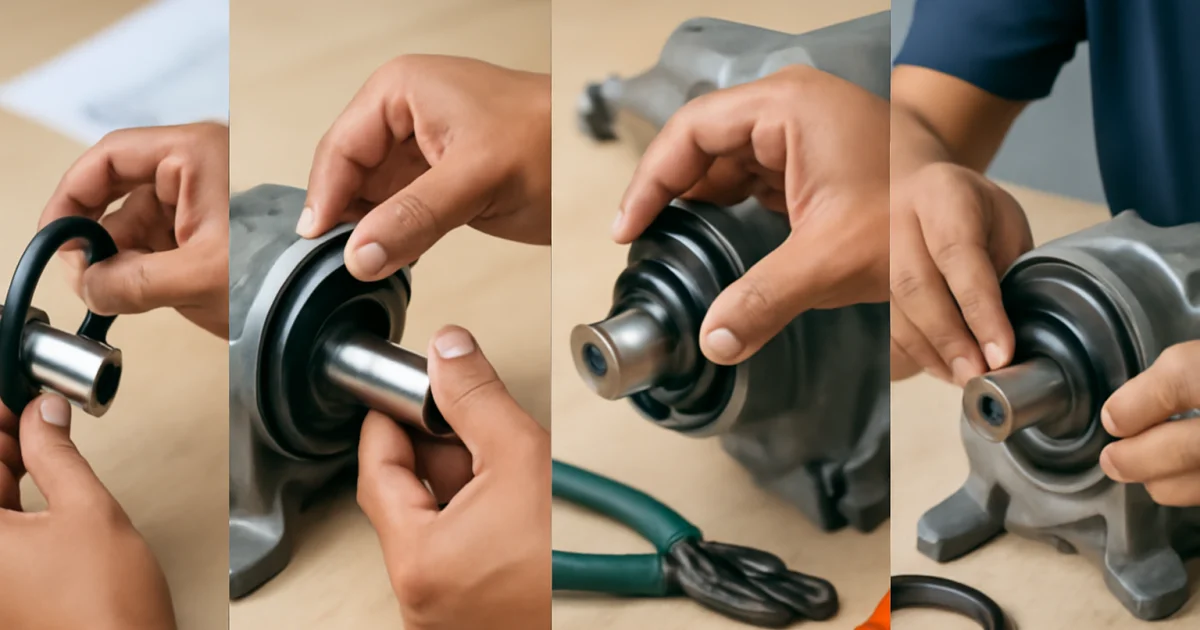
Follow these practical steps for a secure and effective installation:
- Stretch and Slide: Gently stretch the V-Ring over the shaft by hand. Avoid using sharp tools that could damage the elastomer. If necessary, apply a thin layer of compatible lubricant to aid sliding.
- Position the V-Ring: Move the V-Ring along the shaft to its designated position, typically close to the bearing or housing. The sealing lip must face the counterface to block contaminants.
- Align for Uniform Contact: Adjust the V-Ring so that the lip sits evenly against the counterface. The lip should make light, consistent contact without excessive deformation.
- Check for Twisting: Ensure the V-Ring is not twisted or pinched. A misaligned ring can cause uneven wear or leakage.
- Final Inspection: Rotate the shaft manually to confirm that the V-Ring moves smoothly and remains correctly seated. There should be no rubbing noise or visible distortion.
For larger diameters or challenging installations, specialized tools are available, but in most cases, careful manual installation is sufficient.
Step 4: Post-Installation Checks and Maintenance
Installation is only the beginning. Regular inspection and maintenance maximize the V-Ring’s lifespan and your equipment’s operational reliability:
- Monitor the V-Ring and surrounding components for early signs of wear, leakage, or misalignment, especially during initial operation.
- Schedule periodic visual checks as part of your maintenance routine. Look for hardening, cracking, or excessive wear on the sealing lip.
- Replace V-Rings proactively during scheduled equipment overhauls or when signs of degradation appear. This is especially important in high-duty sectors like oil & gas or water treatment, where downtime is costly.
- Keep spare V-Rings, compatible lubricants, and cleaning supplies on hand to minimize downtime during maintenance cycles.
Regular upkeep ensures that the benefits of proper installation are maintained over the lifecycle of your machinery.
Best Practices for V-Ring Installation in Malaysian Industries
To optimize equipment protection in Malaysia’s diverse industrial environments, consider these additional recommendations:
- Source V-Rings and related components from reputable suppliers with proven expertise in hydraulic hoses, industrial seals, and valve fittings.
- Where required, specify products that comply with recognized standards such as ANSI or ASME, particularly for critical piping and flange assemblies. For more insights, visit our article on ANSI flange standards in Malaysia.
- Integrate V-Rings as part of a holistic sealing and maintenance strategy, including O-rings, oil seals, and tube fittings for comprehensive fluid-control solutions.
- Train maintenance teams on proper installation, handling, and inspection techniques to reduce risks and extend equipment longevity.
By following these steps and best practices, Malaysian businesses can ensure that their equipment—whether in manufacturing, petrochemical, or water treatment facilities—remains protected against contaminants, reducing costly failures and maximizing productivity.
Conclusion
V-Rings are a simple yet highly effective way to protect industrial equipment from environmental and operational hazards. When installed and maintained correctly, they help extend the service life of motors, pumps, hydraulic systems, and other vital machinery. For facilities across Malaysia, understanding and applying correct V-Ring installation techniques translates directly into fewer breakdowns, lower maintenance costs, and improved equipment reliability.
Partnering with an experienced supplier like Sunseal Enterprise Sdn. Bhd. ensures you receive the right sealing solutions, technical advice, and ongoing support for your industry’s unique needs. For more information about V-Rings, O-rings, hydraulic hoses, or fluid-control components, explore our range of products and support services today.
Frequently Asked Questions
What is a V-Ring and how does it work?
A V-Ring is a flexible rubber seal designed to fit axially on a shaft and seal against a counterface, protecting bearings and other components from contaminants like dust, water, and oil. It works by creating a barrier that prevents external substances from entering the system while allowing the shaft to rotate freely.
How do I choose the right V-Ring material for my equipment?
Select the material based on the contaminants and temperatures present in your environment. NBR is suitable for oil and standard industrial conditions, FKM is ideal for higher temperatures and chemical resistance, while EPDM is best for water and chemical-rich settings. Always match the V-Ring material to your specific operational requirements.
Can V-Rings be used alongside O-rings and oil seals?
Yes, V-Rings are often used in combination with O-rings and oil seals for comprehensive sealing in dynamic systems. While O-rings and oil seals handle static and radial sealing, V-Rings provide additional axial protection against contaminants, especially in rotating applications.
What are common installation mistakes to avoid with V-Rings?
Avoid stretching the V-Ring excessively, using sharp tools that can damage the elastomer, or installing the ring with the lip facing the wrong direction. Ensure the counterface is clean and smooth, and confirm the V-Ring is not twisted or pinched during installation.
Why is ANSI important when selecting flanges and fittings in Malaysia?
ANSI (American National Standards Institute) sets recognized standards for dimensions, materials, and performance of flanges and fittings. Using ANSI-compliant components ensures compatibility, safety, and reliability, which is especially important in high-pressure and critical industrial applications.
Need Reliable V-Ring Solutions for Your Malaysian Facility?
Sunseal Enterprise Sdn. Bhd. is your trusted partner for V-Rings, O-rings, oil seals, hydraulic hoses, tube fittings, and industrial fluid-control components. With extensive experience supporting Malaysia’s leading industries, we offer expert product selection, technical guidance, and after-sales support to keep your equipment running smoothly. Enhance your maintenance strategy and protect your machinery with premium sealing solutions from Sunseal.