


Beginner Guide to Buying Oil Seals in Malaysia: Types, Materials, Sizes, and How to Specify the Right Seal
Ordering an oil seal sounds simple until you receive a part that “almost fits” but still leaks, runs hot, or fails early. The challenge is usually not finding a supplier—it’s specifying the right seal so it matches the shaft, housing, speed, temperature, and the fluid you want to retain (or keep out).
This beginner guide is for industrial buyers in Malaysia who want a practical way to select and purchase Oil Seals Malaysia without guesswork. You’ll learn common seal types and lip designs, how to choose materials, how to measure correctly, and what information to include in an inquiry.
What an oil seal does (and why the details matter)
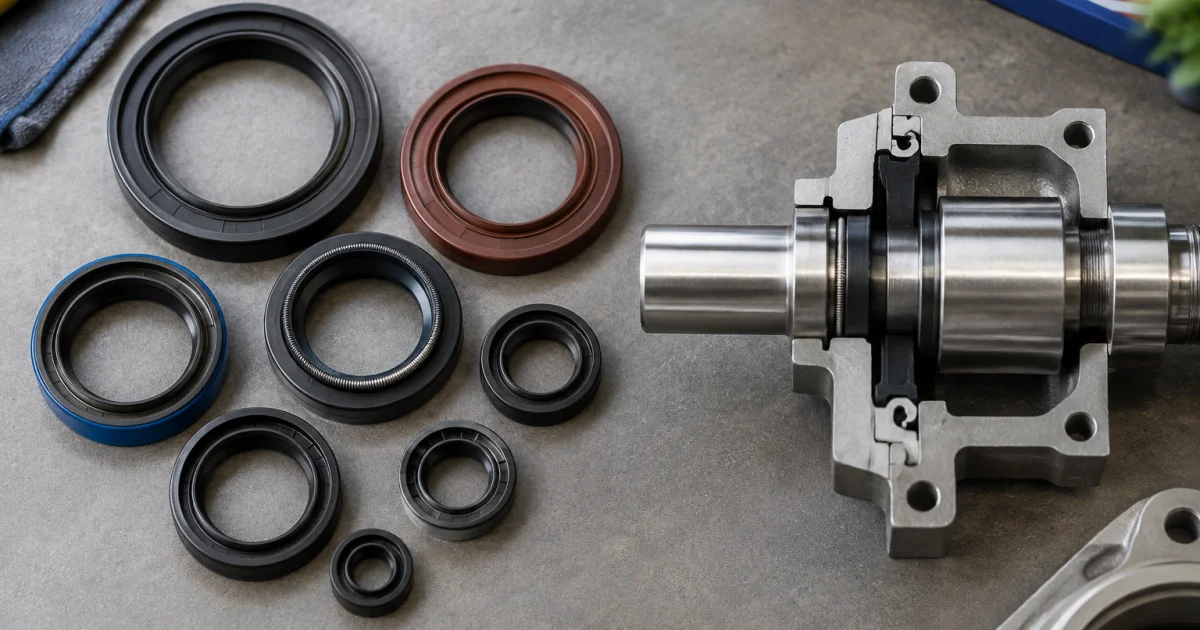
An oil seal (rotary shaft seal / radial lip seal) sits where a rotating or reciprocating shaft passes through a housing. Its main jobs are to:
- Retain lubricant (oil or grease) in gearboxes, pumps, motors, bearing housings, reducers
- Exclude contaminants such as dust, water spray, slurry, metal fines, and debris
- Support reliability by maintaining a stable sealing lip and protecting bearings
“Same size” doesn’t always mean “same seal.” A design that survives in a clean, cool motor may fail in a hot zone, a wet washdown area, or a dusty line. Before buying, identify the likely failure mode: oil leakage, contamination ingress, lip wear from a grooved shaft, pressure pushing the lip open, or heat/chemical hardening. The cause points to the right lip design, material, or accessories (for example, a wear sleeve).
Common oil seal types and lip designs you’ll encounter
Brand names vary, but the construction choices below are common across Malaysia’s MRO supply chain. Describing the design clearly helps avoid mismatches.
Rubber-covered vs metal-cased seals
- Rubber-covered outer diameter (OD): Helps seal minor bore imperfections and can reduce OD corrosion. Common for general industrial gearboxes and motors.
- Metal-cased OD: Strong retention in a stable, well-machined bore; often used in heavier-duty or higher-temperature setups.
If the old seal left corrosion marks or an OD impression, address the bore condition (clean/polish/repair or change OD style) rather than replacing like-for-like blindly.
Single lip, double lip, and dust lip (excluder)
- Single lip: Mainly for lubricant retention in cleaner environments.
- Double lip: Adds secondary sealing/exclusion for light dust or splash.
- Primary lip + dust lip: Common option: inner lip retains lubricant; outer dust lip reduces ingress.
Orientation matters: the spring-loaded lip typically faces the fluid you want to retain. Backward installation is a frequent cause of immediate leaks.
Spring-loaded (garter spring) vs non-spring designs
Spring-loaded lips maintain more consistent contact as the lip wears or the rubber relaxes, so they’re common for industrial rotating shafts. Non-spring versions exist but should be selected intentionally for the application.
Directional or hydrodynamic lip designs
Some lips include microscopic pumping features that return oil inward during rotation. These may be directional. If your equipment reverses direction, runs intermittently, or can rotate backward during shutdown, tell your supplier so you don’t select a seal that “pumps” oil outward.
Oil seals vs mechanical seals (don’t confuse them)
Oil seals are common for gearboxes, motors, and bearing housings. Mechanical seals are common in pumps where a lip seal would wear quickly. If you see seal faces, springs, or a seal chamber/flush plan, you likely need a mechanical seal instead. When unsure, share photos or the manual.
Material selection: matching rubber, metal, and spring to the job
Material choice strongly affects seal life. Match the elastomer to temperature, fluid, and environment—then confirm the metal/spring can handle corrosion or splash.
Common elastomer materials
- NBR (Nitrile): General-purpose choice for many mineral oils and typical industrial gearboxes. Can harden faster at higher temperatures or with aggressive chemicals.
- FKM (often known as Viton): Better for higher temperatures and broader chemical compatibility; often used when NBR fails early from heat or exposure.
- Silicone: Flexible at low temperatures; suitability depends on oil type and abrasion conditions.
- EPDM: Good for water/steam and polar fluids, but generally not compatible with many oils (a common wrong selection in oil service).
If you’re not sure about the media, identify whether it’s mineral or synthetic oil, grease type, and any exposure to water, coolant, steam, cleaners, or solvents. Washdown and chemical splash can drive both elastomer and metal/spring choices.
Case and spring materials
In wet, marine, washdown, or chemical environments, discuss corrosion resistance. A corroded garter spring reduces sealing force and can cause leaks even when the lip looks acceptable.
Speed, temperature, and shaft condition can make or break seal life
Even the right elastomer fails early if the shaft or system conditions are wrong. For repeat failures, check:
- Shaft surface where the lip runs (grooves, scoring, hardness issues)
- Runout/misalignment (wobble accelerates lip wear)
- Pressure in the cavity (standard lip seals are for low/no pressure unless designed otherwise)
- Vent/breather function (trapped pressure pushes oil past the lip)
How to measure oil seal sizes correctly (and avoid common mistakes)
Most oil seals are specified by three numbers in millimetres:
- ID: nominal shaft diameter
- OD: nominal housing/bore diameter
- Width: axial thickness
A common callout is 25 x 47 x 7 (ID x OD x W). Don’t rely only on the old seal marking—previous replacements may have been “close enough.”
Best practice: measure the shaft and bore, not only the old seal
- Shaft diameter at the lip track (measure multiple points to detect wear)
- Housing bore (check for damage or out-of-round)
- Available width/depth in the housing
If the shaft has a visible groove, a same-size seal may still leak. Consider a wear sleeve, repositioning the seal (if possible), or shaft repair/replacement.
Check units and avoid “almost fits” conversions
Malaysia stock is commonly metric, but some equipment uses inch-based shafts/bores. Conversions can produce near-matches that fail. If your measurement is close to an imperial equivalent, share the measured value and equipment model so the supplier can confirm the correct standard.
Account for orientation and installation constraints
- Will the sealing lip face the oil side once installed?
- Is there enough lead-in chamfer on the housing bore?
- Will the seal pass over keyways, threads, or splines (lip damage risk)?
- Do you need a split seal due to difficult disassembly?
Many “new seal leaks” are installation-related. Use a proper driver tool, protect the lip during assembly, and lightly lubricate the lip as recommended.
How to specify the right oil seal when buying (a practical checklist)
A complete specification helps a supplier match the correct design quickly—especially when multiple lip designs exist in the same size.
Minimum information to provide
- Size: ID x OD x Width (mm), plus measured shaft/bore if available
- Design: rubber-covered or metal-cased OD; single/double/dust lip; spring-loaded; directional (if applicable)
- Application: gearbox, motor, pump bearing housing, conveyor roller, etc.
- Media: oil/grease type; presence of water, coolant, chemicals, abrasive dust
- Operating temperature: approximate range
- Shaft condition: smooth/grooved, sleeve present, repair planned
- Rotation: direction (CW/CCW) and whether it reverses
Helpful extras that reduce back-and-forth
- Photos of the old seal (front/back) and the installation area
- Seal markings (numbers/letters), if readable
- Equipment model and OEM part number (if available)
- Quantity and urgency (breakdown vs planned shutdown spares)
Simple example of a purchase request
Need rotary shaft oil seal, size 40 x 62 x 8 mm. Spring-loaded primary lip with dust lip, rubber-covered OD preferred. Application: gearbox output shaft, mineral gear oil. Ambient dusty area, no washdown. Shaft has slight wear line; please advise if wear sleeve recommended. Rotation: CW only. Qty: 4 pcs.
Choosing a supplier in Malaysia: what to ask before you buy
For MRO procurement, success is more than size matching. Aim for consistent quality, correct technical guidance, and reliable availability. Ask potential suppliers:
- Can you confirm the seal design from my photo or old part?
- Can you advise on material selection (NBR vs FKM vs others) based on temperature and media?
- Do you supply related components (O-rings, hydraulic/pneumatic seals, wear sleeves, maintenance accessories) for shutdown planning?
- Can you support wider fluid-control needs (valves, tube fittings, regulators, hoses, pumps, motors) to reduce vendor count?
If seal failures appear linked to system issues (pressure spikes, inadequate venting), a supplier who can discuss upstream components can help prevent repeat breakdowns. For related reading, see how pressure regulators work in Malaysian industrial systems and best practices for selecting hydraulic hose in Malaysia.
Conclusion: buy once by specifying clearly
Treat an oil seal as a technical component, not a generic spare. Measure the shaft and housing, match lip design to contamination risk and rotation, select elastomer based on temperature and media, and note shaft condition and any pressure/venting concerns.
When you provide a clear spec—size, design, operating conditions, and photos/markings where possible—you reduce leaks, premature failures, and rushed reorders. If you’re uncertain, send measurements and photos to a supplier with technical support to confirm the closest correct match before ordering.
Frequently Asked Questions
What do the numbers on an oil seal (e.g., 25x47x7) mean?
They usually indicate ID x OD x width in millimetres: shaft diameter (ID), housing/bore diameter (OD), and seal thickness (width). If possible, verify by measuring the shaft and housing, not only relying on the old seal marking.
Should the spring side of an oil seal face inward or outward?
In most applications, the spring-loaded sealing lip faces the fluid you want to retain (oil/grease side). The outward side may include a dust lip to help block contaminants. If installed backwards, leakage is common.
NBR vs FKM (Viton): which oil seal material should I choose?
NBR is widely used for general mineral oils and typical industrial gearboxes. FKM is often chosen for higher temperatures or tougher chemical exposure. The best choice depends on your operating temperature, oil type, and any water/chemical splash in the area.
Can I replace an oil seal using only the old seal as a reference?
It’s possible, but risky if the previous seal was already an incorrect substitute or if the shaft and housing have worn. Best practice is to measure the shaft diameter and housing bore, check for grooves or runout, and confirm the lip design (single, double, dust lip) before ordering.
What information should I send to a supplier when requesting a quotation for oil seals?
Send the size (ID x OD x width), seal design (rubber-covered or metal case, single/double/dust lip, spring-loaded), application (gearbox/motor/pump), media (oil/grease and any water/chemicals), operating temperature, rotation direction, quantity, and photos of the old seal and installation area if available.
Need help specifying the right oil seal?
Sunseal Enterprise Sdn. Bhd. supports Malaysia’s industrial maintenance teams with oil seals, O-rings, hydraulic and pneumatic seals, plus related MRO components like hoses, fittings, valves, regulators, tubes, pipes, flanges, pumps, and motors. Share your measurements, photos, and operating conditions—our team can help you confirm the suitable seal type and material for your application.