

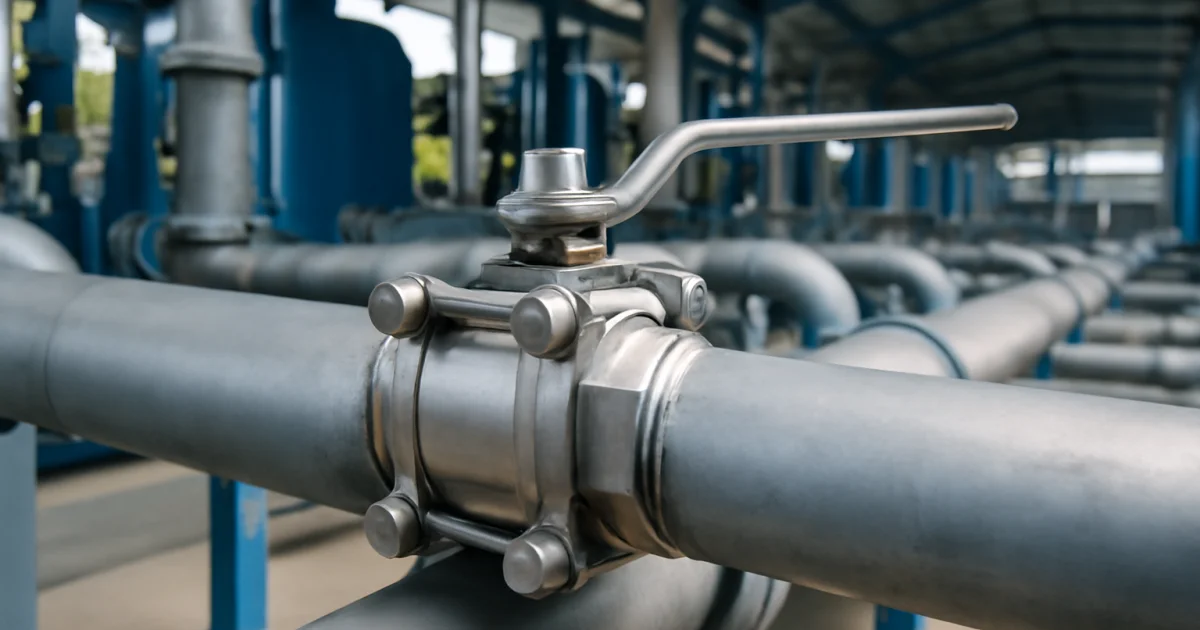

Stainless Steel Ball Valve Solutions for Malaysian Water Treatment Plants
Across Malaysia, water treatment plants face the challenge of maintaining safe, efficient, and long-lasting fluid control systems. A key component in these critical operations is the industrial valve—specifically, the stainless steel ball valve. In this article, we go through how advanced ball valve solutions from Sunseal Enterprise Sdn. Bhd. can support water treatment facilities in Malaysia, improving reliability, reducing maintenance, and ensuring compliance with demanding engineering standards. For readers comparing options, Stainless Steel Ball Valve Malaysia is the main topic this guide explains.
Context: The Role of Valves in Malaysian Water Treatment Plants
Water treatment facilities in Malaysia handle a wide array of processes—filtration, chemical dosing, backwashing, and distribution. Each stage demands precise control of water flow and pressure, often under harsh conditions that can corrode or wear down standard components. Stainless steel ball valves are favored in these environments for their:
- Exceptional resistance to corrosion from chlorinated water and chemicals
- Durable construction for high-pressure and high-frequency operation
- Low maintenance needs, thanks to their simple yet robust design
- Reliable shutoff and flow control, even after years in service
Despite the advantages, not all ball valves are created equal. For Malaysian plants, the right specification and material quality are essential to prevent costly downtime or water quality issues.
Challenge: Addressing Frequent Valve Failures and Maintenance Downtime
A municipal water treatment plant in Selangor experienced ongoing issues with valve performance. The original valves, made from standard brass and plastic, suffered from rapid corrosion, leaks, and sticking. This resulted in:
- Unexpected shutoffs during peak operation hours
- Frequent emergency maintenance calls
- Concerns about water safety due to potential contaminant ingress
- Increased operational costs and downtime
With growing demands on the facility and new regulatory requirements for water quality, the engineering team decided to upgrade to stainless steel ball valves. The objective was to improve reliability, reduce maintenance frequency, and extend the service life of critical fluid control points.
Approach: Specifying and Installing Stainless Steel Ball Valves
The facility partnered with Sunseal Enterprise Sdn. Bhd. to review their system’s needs and select appropriate valve solutions. The process included:
- Site assessment to identify key corrosion and pressure risks
- Review of pipe sizes, flow rates, and chemical exposure
- Selection of flanged stainless steel ball valves to fit existing ANSI-standard piping
- Incorporation of compatible tube fittings and industrial hose assemblies for seamless integration
- Consultation on valve maintenance and sealing requirements, including the use of high-quality O-rings and oil seals for leak prevention
Installation was scheduled during a planned shutdown, minimizing disruption. The stainless steel ball valves were positioned at critical control points—main inlets, chemical dosing lines, and backwash circuits. Each valve featured precision-engineered seats and seals designed to withstand aggressive chemicals and fluctuating pressure.
Result: Improved Reliability and Reduced Maintenance
Post-installation, the water treatment plant saw immediate improvements. Key outcomes included:
- Significant reduction in valve-related failures: No unscheduled shutdowns attributed to valve sticking or leaks in the first year of operation.
- Lower maintenance costs: Scheduled preventive checks revealed only minimal wear, with no need for emergency repairs.
- Enhanced water safety and compliance: The new valves maintained consistent shutoff performance, reducing risk of contamination.
- Longer component lifespan: Stainless steel construction proved highly resistant to both chemical and mechanical wear.
Operators also noted easier handling during routine maintenance, thanks to the smooth operation and standardization of valve types across the facility. The engineering team credited the robust design and expert product support from Sunseal Enterprise in achieving these results.
Lessons Learned: Selecting Industrial Valves for Demanding Environments
This demonstrates several best practices for Malaysian facility managers and project consultants:
- Prioritize material quality: Stainless steel—especially grades suited for potable water—provides superior durability over brass or plastic in aggressive environments.
- Choose the right specifications: Matching valve size, pressure rating, and connection type (such as flanged or threaded) with system requirements prevents retrofitting headaches.
- Consider the broader fluid system: Integrating compatible hydraulic hoses, tube fittings, and seals ensures full-system reliability.
- Partner with experienced suppliers: Technical guidance and after-sales support can be as valuable as the product itself, especially during commissioning and maintenance.
Water treatment plants operate in a demanding context, where every component must perform reliably for years. This shows how investing in high-quality stainless steel ball valves—and working with an industrial partner who understands Malaysian standards—can deliver tangible operational benefits.
Comparing Valve Types: Why Stainless Steel Ball Valves Outperform Alternatives
When evaluating fluid control solutions for water treatment plants, the choice between different valve materials and designs is critical. While brass, PVC, or cast iron valves are commonly used in less demanding environments due to their lower upfront costs, these alternatives frequently fall short in the Malaysian context. Tropical humidity, aggressive water chemistry, and increasing regulatory scrutiny expose the limitations of such materials. Brass valves, for example, can suffer dezincification under prolonged exposure to chlorinated water, while plastics degrade and warp under thermal cycling and chemical attack. In contrast, stainless steel ball valves retain their mechanical integrity, providing consistent performance and a lower total cost of ownership over time.
Another key factor is the internal design of the valve. Ball valves, with their quarter-turn mechanism and full-bore opening, offer minimal flow restriction and rapid shutoff capability. This contrasts with gate or globe valves, which may be more susceptible to fouling and require more frequent adjustment. For facilities where operational uptime and safety are paramount, these functional advantages translate directly into reduced service interruptions and improved control over dosing and filtration processes.
Practical Steps for Successful Valve Replacement Projects
For facility managers considering an upgrade to robust valve solutions, a systematic approach ensures a successful transition. The following checklist summarizes key steps based on real-world Malaysian projects:
- Assessment of Existing Infrastructure: Identify all locations where valves are critical to process safety, maintenance access, or regulatory monitoring. Document pipe materials, diameters, and any legacy standards that may affect compatibility.
- Specification Development: Work with a qualified supplier to specify valve body grades (such as 304 or 316 stainless steel), pressure class, and end connections. Consider the chemical compatibility of seals and gaskets with the full range of process fluids.
- Lifecycle Cost Analysis: Compare not just the initial purchase price, but long-term factors such as expected service life, maintenance intervals, and potential downtime costs. Stainless steel often delivers a favorable return on investment when these aspects are included.
- Training and Documentation: Ensure that operations and maintenance personnel are familiar with installation best practices, torque settings, and inspection routines for the new valves. Keep clear records for warranty and compliance.
- Post-Installation Review: After commissioning, monitor valve performance with periodic inspections. Capture lessons learned and update standard operating procedures accordingly.
Checklist for Ensuring Long-Term Valve Performance
- Specify certified stainless steel materials suitable for the water chemistry and operating conditions.
- Select valves with proven seat and seal technology for chemical resistance.
- Confirm compatibility of valve dimensions and connection types with all piping and automation equipment.
- Partner with suppliers who offer documentation, technical support, and after-sales service.
- Schedule preventive maintenance and maintain detailed service records for all critical valves.
Conclusion
Stainless steel ball valves are a proven solution for Malaysian water treatment facilities seeking enhanced durability, safety, and system performance. With the right specification and expert support, these valves help reduce downtime, protect water quality, and simplify long-term maintenance. Sunseal Enterprise Sdn. Bhd. continues to provide engineering-focused valve and fluid control solutions to Malaysia’s leading water treatment operators, supported by a broad range of industrial hoses, fittings, seals, and accessories.
For more technical insights and product details, explore our resources on stainless steel ball valves, flanged ball valves, and our full valve product range.
Frequently Asked Questions
Why are stainless steel ball valves preferred in Malaysian water treatment plants?
Stainless steel ball valves offer superior corrosion resistance, long service life, and reliable shutoff performance—key requirements in water treatment where exposure to chemicals and high-pressure cycles is common.
What are the main considerations when selecting ball valves for water treatment applications?
Consider valve material, pressure and temperature ratings, compatibility with existing piping (such as ANSI flanges), and the suitability of seals and O-rings for chemical exposure and water quality compliance.
How do stainless steel ball valves reduce maintenance needs?
Their robust construction and corrosion resistance minimize wear and leakage, resulting in fewer emergency repairs and longer intervals between scheduled maintenance.
Can stainless steel ball valves be integrated with other fluid control components?
Yes, they can be paired with compatible tube fittings, industrial hoses, hydraulic hose components, and reliable seals to create a complete, leak-free fluid control system.
Where can I find more information about industrial valves and related products in Malaysia?
You can explore Sunseal Enterprise Sdn. Bhd.’s resources on stainless steel ball valves, flanged ball valves, and a full range of industrial hoses and fittings for comprehensive fluid control solutions.
Upgrade Your Water Treatment Facility with Reliable Stainless Steel Ball Valves
Ensure lasting reliability, safety, and compliance in your water treatment operations with high-quality stainless steel ball valves and complete fluid control solutions from Sunseal Enterprise Sdn. Bhd. Our expert team supports Malaysian industry with valves, hoses, fittings, seals, pumps, and technical guidance tailored to demanding environments.